
Beyond Guesswork: The AI Revolution in E-commerce Pricing
Estimated reading time: 5 minutes
Key Takeaways
- AI-powered dynamic pricing uses machine learning to analyze vast datasets—like competitor prices, demand signals, and price elasticity—in real-time, moving far beyond simple rule-based systems.
- The core mechanisms, including real-time adjustment algorithms and granular elasticity modeling, unlock hidden profit by autonomously finding the optimal price for each product at any given moment.
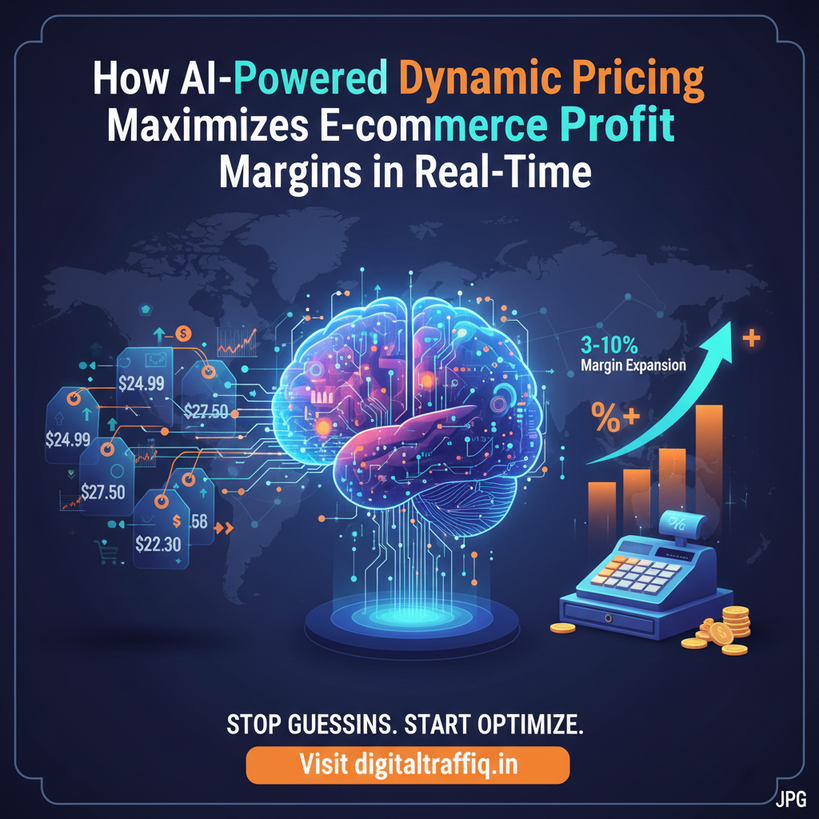
- Businesses implementing AI-driven pricing strategies typically see tangible results like margin expansion of 3-10%, increased market share, and improved inventory turnover.
- Successful implementation requires a strategic partnership, focusing on goal alignment, data integration, phased rollout, and continuous optimization.
- Intelligent, adaptive pricing is becoming a competitive necessity, transforming pricing from a static cost into a dynamic, profit-driving engine.
Table of Contents
In the fiercely competitive world of e-commerce, where a single percentage point can mean millions in lost or gained revenue, pricing is no longer a static strategy set quarterly. It’s a dynamic, real-time battlefield. For years, merchants relied on intuition, manual competitor checks, and broad-brush discounting—a reactive approach that leaves significant profit on the table. Today, a new paradigm, powered by artificial intelligence, is redefining the rules of the game: AI-powered dynamic pricing and revenue optimization.
At Digital Traffiq, we understand that your pricing strategy is your most powerful profit lever. The shift from static to intelligent, adaptive pricing isn’t just an incremental improvement; it’s a fundamental transformation in how e-commerce businesses operate. This article will delve into how sophisticated AI algorithms analyze vast datasets to set optimal prices in real-time, directly translating to maximized profit margins and a formidable competitive edge.
What is AI-Powered Dynamic Pricing? Moving Beyond Simple Rules
Dynamic pricing itself isn’t new—airlines and ride-sharing apps have used it for years. However, traditional rule-based systems (“if competitor X lowers price, match it”) are simplistic and easily gamed. AI-driven dynamic pricing is a quantum leap forward. It employs machine learning models that ingest and analyze a multifaceted array of data points in milliseconds:
- Competitive Price Intelligence: Continuously monitoring competitors’ prices, stock status, and promotions across multiple channels.
- Market Demand Signals: Analyzing search trends, seasonality, time of day, and even local weather patterns that influence buyer intent.
- Price Elasticity Modeling: Understanding how sensitive demand for each specific product is to price changes. A luxury handbag has different elasticity than a pack of AA batteries.
- Customer & Behavioral Data: Considering purchase history, browsing behavior, and customer lifetime value to personalize pricing strategies where appropriate.
- Internal Business Goals: Balancing objectives like margin maximization, inventory clearance, or market share growth.
The AI doesn’t just react; it predicts. It simulates thousands of pricing scenarios to determine the price point that will most likely achieve your defined business goal—whether that’s maximum profit, fastest sell-through, or competitive positioning—for each product, at any given moment.
The Core Mechanisms: How AI Unlocks Hidden Profit
The magic of revenue optimization AI lies in its ability to execute complex strategies autonomously. Here’s a breakdown of the core mechanisms driving profit maximization:
1. Real-Time Price Adjustment Algorithms
Gone are the days of weekly spreadsheet updates. AI systems make micro-adjustments continuously. If a key competitor goes out of stock, the algorithm can identify the opportunity for a slight margin increase. Conversely, if a new competitor enters the market with a deep discount, the AI can recommend a strategic, data-backed response to protect market share without triggering a race to the bottom. This real-time pricing ensures you are always optimally positioned.
2. Granular Price Elasticity Understanding
Not all products are created equal. AI models develop a deep, product-level understanding of demand curves. They can identify “hero” products where price increases have minimal impact on volume (boosting margin) and “traffic-driver” products where a strategic lower price can increase cart size and attract new customers. This price elasticity modeling prevents the costly mistake of applying a one-size-fits-all pricing strategy.
3. Omnichannel & Promotional Optimization
Should you run a 15% off site-wide sale or a targeted BOGO offer on specific SKUs? AI can forecast the outcome of different promotional strategies, optimizing discount depth and timing to clear target inventory while preserving overall brand value and profitability. It ensures your promotional spend is an investment, not a cost.
4. Automated Revenue Management
This is the culmination of all processes: the automated revenue management system. It acts as a 24/7 pricing manager, executing the optimal strategy across your entire catalog. It frees your human experts from manual monitoring and allows them to focus on higher-level strategy, supplier negotiations, and brand development.
The Tangible Business Impact: From Data to Dollars
Implementing an AI-driven pricing strategy isn’t about technology for technology’s sake; it’s about measurable financial outcomes. Businesses leveraging these systems typically see:
- Margin Expansion of 3-10%: The most direct impact. By finding the optimal price point millions of times per day, businesses capture the maximum willingness-to-pay, directly boosting gross margins.
- Increased Competitiveness & Market Share: With competitive price intelligence fed in real-time, you can respond strategically to market moves, winning the buy box on marketplaces and attracting price-sensitive shoppers without engaging in destructive price wars.
- Improved Inventory Turnover: By dynamically pricing slow-moving stock, AI helps convert stagnant inventory into cash faster, improving working capital efficiency.
- Enhanced Customer Insights: The data generated by pricing models provides unprecedented insight into customer behavior and product valuation, informing merchandising, marketing, and procurement decisions.
Implementing AI Pricing: A Strategic Partnership with Digital Traffiq
Adopting AI profit optimization requires more than just buying software. It requires a strategic partnership. At Digital Traffiq, our approach involves:
- Goal Alignment & KPI Definition: We work with you to define primary and secondary objectives (e.g., profit maximization vs. growth).
- Data Integration & Model Training: We securely integrate with your PIM, ERP, and sales channels, then train custom models on your historical data.
- Phased Rollout & Control: Implementation begins with a controlled product category, allowing for validation and tuning. You maintain ultimate control with override capabilities and guardrails.
- Continuous Optimization & Reporting: Our system learns and improves continuously. We provide clear, actionable dashboards showing margin lift, competitive wins, and ROI.
The Future of Pricing is Autonomous, Adaptive, and Intelligent
The e-commerce landscape is moving too fast for human-only pricing strategies. Dynamic e-commerce pricing powered by AI is no longer a luxury for the largest retailers; it’s a critical competitive necessity for any serious online merchant. It represents a shift from guessing to knowing, from reacting to predicting, and from leaving money on the table to capturing every possible dollar of profit.
By harnessing real-time data, predictive analytics, and sophisticated AI pricing strategy, businesses can transform their pricing from a static cost into a dynamic, profit-driving engine. The question is no longer if you should adopt intelligent pricing, but how quickly you can implement it to secure your margin advantage and outmaneuver the competition.
Ready to stop guessing and start optimizing? Explore how Digital Traffiq’s expertise in AI-driven revenue optimization can unlock your hidden profit potential. Let’s build a pricing strategy that works as hard as you do.