
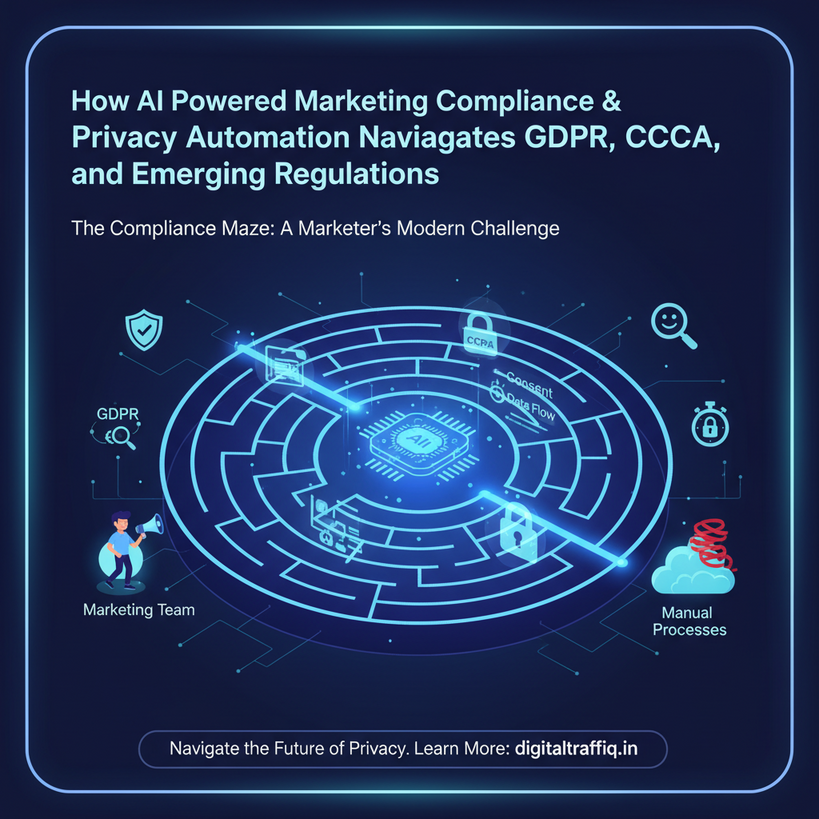
The Compliance Maze: A Marketer’s Modern Challenge
Estimated reading time: 6 minutes
Key Takeaways
- Manual compliance processes are unsustainable, creating risk and stifling marketing agility.
- AI-powered automation transforms compliance from a cost center into a strategic asset for building trust.
- Key functions include intelligent consent management, automated data mapping, and real-time campaign monitoring.
- Beyond avoiding fines, privacy automation improves data quality and future-proofs your business.
- Implementation requires a strategic, platform-based approach integrated deeply with existing marketing tools.
Table of Contents
- Understanding the Regulatory Giants: GDPR & CCPA
- Why Manual Compliance is a Broken Model for Modern Marketing
- The AI-Powered Solution: Automating Trust and Compliance
- Beyond Avoidance: The Strategic Advantages of Privacy Automation
- Implementing AI-Powered Compliance: A Practical Path Forward
- Conclusion: Compliance as a Catalyst for Growth
In today’s digital landscape, marketing teams are caught in a relentless tug-of-war. On one side, the pressure to deliver personalized, data-driven campaigns that drive revenue. On the other, a rapidly evolving thicket of global privacy regulations like the GDPR (General Data Protection Regulation), CCPA (California Consumer Privacy Act), and a host of emerging state and international laws. A single misstep—a non-compliant email, an improperly managed consent record, or a flawed data subject request process—can result in catastrophic fines, severe reputational damage, and the erosion of hard-earned customer trust. For years, navigating this maze meant manual processes, legal consultations for every campaign, and a constant, paralyzing fear of human error.
This is where a paradigm shift is occurring. Forward-thinking organizations are moving beyond reactive, checklist compliance to proactive, integrated privacy automation. At the forefront of this shift is Artificial Intelligence. AI-powered marketing compliance is no longer a futuristic concept; it’s a critical operational necessity. It represents the convergence of legal necessity and marketing agility, enabling brands to scale their efforts responsibly. This article explores how AI-driven systems are transforming compliance from a burdensome cost center into a strategic asset for building consumer trust and sustainable growth.
Understanding the Regulatory Giants: GDPR & CCPA
Before diving into the solution, it’s crucial to understand the scope of the problem. The GDPR and CCPA, while sharing common principles, present distinct challenges for marketers.
The GDPR: Consent is King
Enforced in the EU and affecting any business handling EU citizen data, the GDPR established a new global standard. Its core tenets for marketers include:
- Lawful Basis for Processing: Explicit, informed, and unambiguous consent is required for most marketing activities. Pre-ticked boxes are invalid.
- Right to Access & Erasure: Individuals can request a copy of their data or demand its deletion (the “right to be forgotten”).
- Data Portability: Data must be provided in a structured, commonly used format.
- Privacy by Design: Data protection must be embedded into the development of business processes.
The CCPA & Its Progeny: Control and Transparency
The CCPA (and its strengthened successor, the CPRA) focuses on California residents, granting them:
- The Right to Know: What personal information is being collected and how it’s used and shared.
- The Right to Opt-Out: Of the sale of their personal information.
- The Right to Deletion: Similar to GDPR’s right to erasure.
- The Right to Non-Discrimination: For exercising their privacy rights.
With states like Virginia, Colorado, and Utah enacting similar laws, marketers face a complex patchwork of requirements.
Why Manual Compliance is a Broken Model for Modern Marketing
Relying on spreadsheets, periodic legal audits, and manual workflows to manage compliance is fraught with risk:
- Scale & Speed: Manual processes cannot keep pace with the volume of data interactions, consent signals, and potential data subject requests (DSRs) a modern business generates.
- Human Error: A simple mistake in segmenting an email list or forgetting to log a consent preference can lead to a violation.
- Operational Friction: Marketing campaigns are delayed waiting for legal approval, stifling agility and time-to-market.
- Inconsistent Enforcement: Rules may be applied differently across channels (website, email, ads), creating compliance gaps.
The AI-Powered Solution: Automating Trust and Compliance
This is where AI-powered data governance and regulatory compliance automation come into play. These systems act as an always-on, intelligent layer between your marketing activities and the regulatory landscape. Here’s how they work in practice:
1. Intelligent Consent Management
AI transforms static cookie banners and permission forms into dynamic, intelligent systems. It can:
- Geo-Target Compliance Rules: Automatically serve the correct consent mechanism (GDPR-style opt-in vs. CCPA-style opt-out) based on the user’s jurisdiction.
- Manage Granular Preferences: Track consent not just as a “yes/no,” but for specific categories (e.g., analytics, advertising, essential cookies) across all touchpoints.
- Automate Proof of Consent: Create an immutable, timestamped audit trail for every consent event, which is crucial for regulatory demonstrations.
2. Automated Data Discovery & Mapping
You can’t protect what you don’t know you have. AI tools scour your data ecosystem—CRMs, CDPs, cloud storage, marketing platforms—to automatically discover, classify, and map personal data flows. This creates a living data inventory, showing where data originates, where it’s stored, and with whom it’s shared, forming the foundation for all compliance efforts.
3. Streamlining Data Subject Requests (DSRs)
Manually fulfilling a “right to know” or “right to delete” request can take weeks and involve multiple departments. AI-powered marketing compliance systems automate this:
- Intake & Verification: Automate the request intake form and identity verification process.
- Data Retrieval: The AI locates all instances of the individual’s data across connected systems.
- Redaction & Fulfillment: It can compile the report, redact third-party data, or execute secure deletion workflows, ensuring requests are fulfilled within mandated timeframes (e.g., 30 days under CCPA).
4. Real-Time Campaign Compliance Monitoring
Imagine an AI copilot for your marketing team. Before a campaign launches, the system can scan audience segments, email content, and data usage plans against configured compliance rules. It flags potential issues in real-time: “This segment includes EU individuals who have not consented to promotional emails.” This prevents violations before they happen.
5. Automated Compliance Reporting
Generating reports for regulators or internal audits is time-consuming. AI automates this, producing clear, accurate reports on consent rates, DSR fulfillment times, data inventory, and policy adherence with a few clicks, turning a days-long task into a minutes-long one.
Beyond Avoidance: The Strategic Advantages of Privacy Automation
While risk mitigation is the primary driver, the benefits of AI marketing compliance extend far beyond avoiding fines:
- Builds Authentic Consumer Trust: Demonstrating robust data stewardship is a powerful competitive differentiator. Transparent, easy-to-use privacy controls enhance brand reputation.
- Unlocks Marketing Agility: With automated guardrails in place, marketing teams can execute campaigns faster and with confidence, knowing they are compliant by design.
- Improves Data Quality: By enforcing clean, consented data collection, you improve segmentation and targeting, leading to higher engagement rates and better ROI.
- Future-Proofs Your Business: A flexible AI system can be updated with new rules as regulations evolve (like upcoming laws in other states or countries), providing long-term scalability.
Implementing AI-Powered Compliance: A Practical Path Forward
Transitioning to an automated compliance framework requires a strategic approach:
- Audit & Assess: Start with a clear understanding of your current data flows, tech stack, and highest-risk areas.
- Choose a Platform, Not a Point Solution: Look for integrated marketing privacy solutions that offer consent management, data mapping, DSR automation, and campaign monitoring in a unified platform.
- Integrate Deeply: The system must connect seamlessly with your CRM, marketing automation, analytics, and advertising tools to be effective.
- Configure & Train: Set policies based on the regulations that apply to you. Train your marketing and legal teams on the new workflows.
- Iterate & Optimize: Use the insights from the platform’s reporting to continuously improve your data practices.
Conclusion: Compliance as a Catalyst for Growth
The era of viewing privacy compliance as a restrictive burden is over.
With AI-powered marketing compliance and privacy automation, forward-thinking companies are reframing it as a cornerstone of customer-centricity and operational excellence. Tools for GDPR compliance automation and CCPA AI tools are not just about legal adherence; they are about building a sustainable foundation for digital marketing in the 21st century.
By automating the complex, you free your team to focus on the creative—developing strategies that resonate, building campaigns that engage, and fostering relationships built on transparency and trust. In a world where data privacy is a fundamental consumer right, the brands that embrace intelligent automation will not only navigate the regulatory maze with ease but will also emerge as the most trusted and successful leaders in their markets.
At Digital Traffiq, we believe that the future of marketing is both powerful and private. By leveraging AI to shoulder the weight of compliance, businesses can finally align their ambitious marketing goals with their unwavering commitment to data ethics, turning privacy from a challenge into their greatest advantage.