
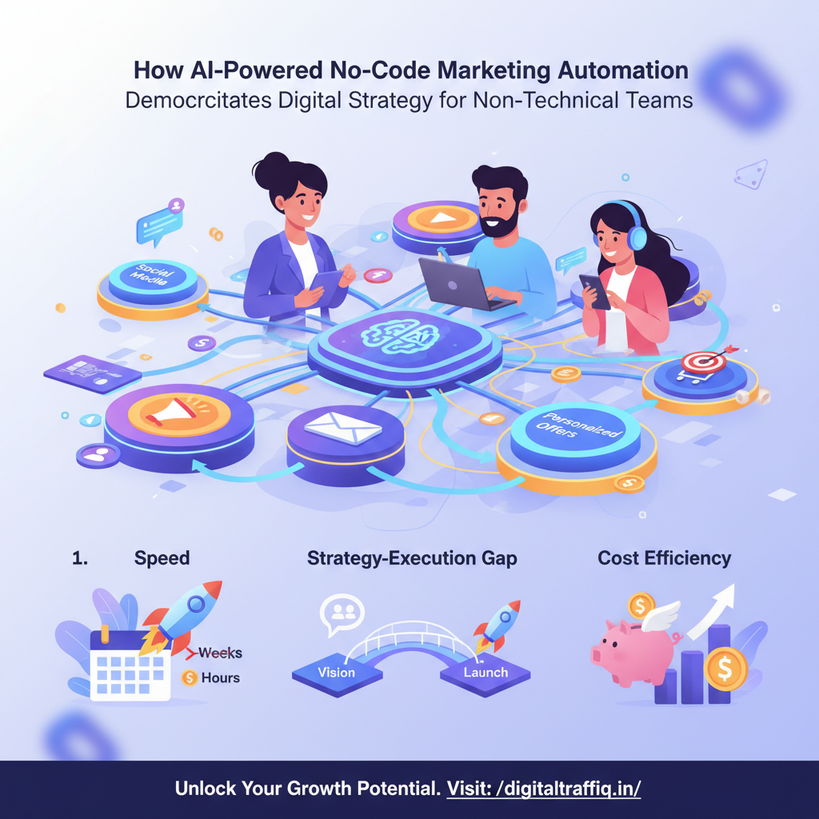
How AI-Powered No-Code/Low-Code Marketing Automation Democratizes Digital Strategy Without Technical Expertise
Estimated reading time: 5 minutes
- No-code/low-code platforms with AI put powerful automation directly into the hands of non-technical marketers, breaking the traditional developer bottleneck.
- This fusion enables unprecedented speed, closes the strategy-execution gap, optimizes costs, and fosters a culture of data-driven experimentation.
- Real-world applications span e-commerce, B2B SaaS, and local businesses, allowing for complex, personalized customer journeys built visually.
- The shift is a strategic imperative, moving the focus from technical staffing to creative strategy and customer insight.
- Platforms like Digital Traffiq are leading this movement by prioritizing user experience and strategic power over technical complexity.
For years, the most powerful tools in digital marketing—the ones capable of orchestrating complex, personalized customer journeys—were locked behind a wall of code. They required dedicated developers, data scientists, and IT teams to implement and maintain. This created a significant gap: the people who understood the customer (marketers, growth managers, business owners) couldn’t execute their vision, and the people who could build the technology (developers) often lacked the deep marketing context. This bottleneck is now dissolving, ushering in a new era of empowerment. The convergence of no-code/low-code platforms and sophisticated Artificial Intelligence (AI) is fundamentally democratizing digital strategy, putting powerful automation capabilities directly into the hands of non-technical teams. This isn’t just a minor convenience; it’s a paradigm shift that redefines who can drive growth.
The Rise of the Citizen Marketer: From Concept to Campaign in Clicks
The term “citizen marketer” or “citizen developer” describes professionals who create applications or automated processes without formal coding training, using intuitive visual interfaces. In marketing, this individual might be a content strategist, a social media manager, or a small business owner. No-code marketing automation platforms provide these users with drag-and-drop builders, pre-built templates, and visual workflow designers. Instead of writing scripts to trigger an email series after a webinar, a marketer can simply connect a “Webinar Attendee” block to an “Email Delay” block and a “Send Nurture Email” block.
When you infuse these platforms with AI, their power multiplies exponentially. AI transforms them from simple rule-based executors into intelligent, predictive, and adaptive systems. Now, that same citizen marketer can:
- Predict Churn: Use AI to analyze user behavior and automatically add at-risk customers to a personalized re-engagement workflow.
- Personalize at Scale: Have AI dynamically populate email content, website banners, or ad copy based on a lead’s industry, past interactions, or inferred intent.
- Optimize Send Times: Let machine learning algorithms determine the perfect moment to send an email to each individual subscriber for maximum open rates.
This fusion creates accessible marketing technology that doesn’t require a PhD in data science to leverage. The platform handles the complex algorithmic heavy lifting, while the marketer provides the strategic direction and creative assets.
Breaking Down the Barriers: The Tangible Benefits of Democratized Automation
1. Unprecedented Speed and Agility
In a fast-moving digital landscape, speed is currency. The traditional process of writing a technical brief, queuing it with the dev team, waiting for sprints, and testing can take weeks or months. With self-service marketing platforms, a marketer can ideate, build, test, and launch a sophisticated multi-channel campaign in a single afternoon. This agility allows businesses to capitalize on trends, respond to real-time events, and run rapid experimentation (A/B testing workflows, landing pages, offers) without bottlenecking innovation.
2. Bridging the Strategy-Execution Gap
The most brilliant marketing strategy is worthless if it can’t be implemented. Democratized digital marketing closes this gap by ensuring the person who crafts the strategy is also the person who builds the automated customer journey. This ensures fidelity to the original vision and eliminates misinterpretation. The marketer maintains full control over the narrative, timing, and personalization logic, leading to more cohesive and effective campaigns.
3. Cost Efficiency and Resource Optimization
Hiring full-stack developers and data engineers is a major investment. Low-code AI tools allow companies to maximize the impact of their existing marketing talent. Teams can do more with less, redirecting precious IT and developer resources to core product innovation rather than marketing execution tasks. This is particularly transformative for small and medium-sized businesses (SMBs) and startups, granting them access to enterprise-grade automation capabilities without the enterprise-grade budget.
4. Fostering a Culture of Data-Driven Experimentation
When tools are easy to use, people use them more. Empowering non-technical teams with AI-powered marketing workflows encourages a culture of testing and data literacy. Marketers are more inclined to ask “what if” and build a quick workflow to find out. They can directly see how changes in segmentation or messaging affect conversion rates, fostering a deeper, hands-on understanding of customer behavior.
Real-World Applications: What Democratized Automation Looks Like in Action
- E-commerce: A store manager uses a drag-and-drop builder to create an automated flow that: 1) Abandons a cart reminder, 2) If clicked, offers a 10% discount via AI dynamic pricing, 3) If purchased, triggers a post-purchase review email and a cross-sell workflow for complementary products—all without writing a single line of code.
- B2B SaaS: A product marketer builds a lead-nurturing sequence that scores leads based on website engagement (powered by AI intent analysis). Leads that visit the pricing page multiple times are automatically enrolled in a high-touch demo-request workflow, while those engaging with educational content receive a nurturing email series.
- Local Service Business: A salon owner sets up a simple SMS and email automation to thank clients after an appointment, request a review, and then, using AI to predict optimal rebooking time, sends a personalized “time for your next appointment” reminder two months later.
The Strategic Imperative: Embracing the Shift
The democratization of technology through no-code marketing automation and AI is not a fleeting trend; it’s the logical evolution of marketing technology. It aligns tool capability with human expertise. Platforms like Digital Traffiq are at the forefront of this movement, building solutions that prioritize user experience and strategic power over technical complexity.
The future of digital strategy belongs to agile, empowered teams. The question for business leaders is no longer “Do we have the technical staff to build this?” but rather “Do we have the creative strategy and customer insight to leverage these empowering tools?” By embracing business process automation for non-tech teams, organizations unlock the full potential of their human talent, accelerate growth, and build more responsive, personalized relationships with their customers at scale. The barrier to entry has been lifted. The power to automate is now in your hands.