
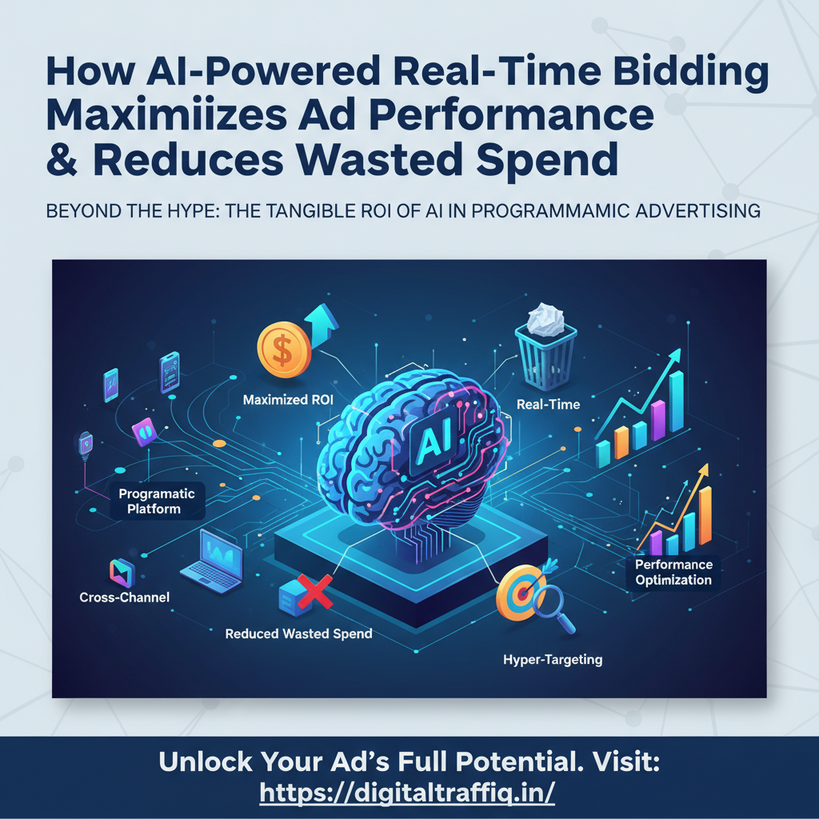
Beyond the Hype: The Tangible ROI of AI in Programmatic Advertising
Estimated reading time: 6 minutes
Key Takeaways
- AI transforms programmatic buying from reactive rule-following to predictive, real-time optimization, maximizing the value of every impression.
- The core benefits are seen in five areas: predictive bidding, hyper-granular targeting, creative optimization, fraud detection, and cross-channel budget orchestration.
- Success requires a solid data foundation, clear KPIs, and a partnership with experts to navigate the complex technology stack.
- The end goal is autonomous, goal-based campaigning, freeing marketers to focus on strategy and creative while AI handles execution.
- Implementing AI-driven programmatic is a decisive step to eliminate wasted ad spend and build a sustainable competitive advantage.
Table of Contents
In the high-stakes arena of digital marketing, the promise of artificial intelligence often feels like a distant future. Yet, for forward-thinking brands and agencies, that future is now—and it’s delivering measurable, bottom-line impact. At Digital Traffiq, we’ve moved past theoretical discussions to witness firsthand how AI-powered Real-Time Bidding (RTB) and programmatic advertising are fundamentally rewriting the rules of media buying. The core challenge remains universal: how do you ensure every dollar of your ad budget works as hard as possible, reaching the right user, at the perfect moment, without waste? The answer lies not in manual guesswork, but in the sophisticated, data-driven automation of AI.
This article will demystify the synergy between AI and programmatic platforms. We’ll explore how intelligent algorithms are transforming ad performance optimization from a reactive task into a proactive, predictive science, leading to unprecedented AI ad spend efficiency and a dramatically improved advertising ROI.
Understanding the Engine: RTB and Programmatic, Supercharged by AI
First, let’s clarify the landscape. Programmatic media buying is the automated process of purchasing digital ad inventory. Real-Time Bidding (RTB) is a specific type of programmatic auction that happens in the milliseconds before a webpage loads. When a user visits a site, an ad impression becomes available. Data about that user is sent to an ad exchange, and advertisers bid for the chance to show their ad. The highest bidder wins, and their ad is displayed.
Traditionally, these bids were based on broad rules and historical data. Enter AI. Modern AI programmatic advertising systems use machine learning models that analyze vast, complex datasets in real-time. They don’t just look at a user’s demographics; they evaluate contextual signals, purchase intent, likelihood to convert, time of day, device, and countless other variables simultaneously. This enables truly AI-driven ad targeting, moving beyond segments to address individual propensity.
The AI Advantage: Five Levers for Maximizing Performance and Minimizing Waste
So, how does this translate into concrete benefits? Here are the five key areas where AI delivers transformative value in the programmatic ecosystem.
1. Predictive Bidding & True Value Assessment
Instead of setting static bid prices, AI algorithms predict the future value of each impression. They ask: “Based on thousands of similar interactions, what is the likelihood this specific impression will lead to a conversion for my campaign goal?” This allows for RTB algorithm optimization where bids are dynamically adjusted. High-value impressions receive more aggressive bids, while low-propensity impressions are passed over or bid on minimally. This is the cornerstone of smart ad budget allocation—allocating funds not evenly, but effectively.
2. Hyper-Granular, Real-Time Audience Targeting
AI models continuously learn and identify micro-patterns in user behavior that humans would miss. They can discover lookalike audiences with incredible precision, finding new users who share the complex behavioral fingerprints of your best customers. This dynamic targeting evolves with the campaign, constantly refining who sees your ads to maximize relevance and engagement while filtering out irrelevant traffic that drains budget.
3. Creative Optimization at Scale
Automated ad optimization extends beyond placement to the creative itself. AI can test thousands of creative variations (images, headlines, copy, CTAs) across different audience segments in real-time. It identifies which combinations resonate best with which users and automatically serves the top-performing version. This ensures your message is not just seen, but is also the most compelling version possible for that individual viewer.
4. Fraud Detection & Brand Safety Enhancement
A significant portion of wasted spend comes from invalid traffic (bots) and placements on non-brand-safe content. AI systems are exceptionally adept at pattern recognition, allowing them to flag and filter out fraudulent impressions in real-time. Similarly, they can analyze page content, sentiment, and context with natural language processing (NLP) to avoid placing ads alongside controversial or irrelevant material, protecting your brand and your budget.
5. Cross-Channel Budget Orchestration
Modern consumers move seamlessly across devices and platforms. AI doesn’t view channels in isolation. It can track user journeys across display, video, social, and native, understanding how touchpoints influence each other. This intelligence allows for holistic smart ad budget allocation, shifting spend to the channels and tactics that are most influential at different stages of the funnel, maximizing overall AI advertising ROI.
From Theory to Practice: Implementing an AI-Driven Programmatic Strategy
Adopting this technology requires more than just flipping a switch. It demands a strategic partnership and a shift in mindset.
- Data Foundation is Key: AI models are only as good as the data they’re fed. First-party data (from your CRM, website, app) is gold. Integrating this data securely with your programmatic platform fuels more accurate modeling and personalization.
- Define Clear Objectives & KPIs: AI needs direction. Are you optimizing for brand awareness, lead generation, or direct sales? Clear KPIs (like Target CPA or ROAS) allow the algorithm to optimize towards a defined north star.
- Embrace a Test-and-Learn Culture: Start with controlled campaigns. Allow the AI learning phase to run, analyze its decisions, and refine your inputs. Trust the process—the system will uncover efficiencies invisible to manual analysis.
- Partner with Expertise: Navigating the complex landscape of demand-side platforms (DSPs), data management platforms (DMPs), and AI capabilities is challenging. Partnering with specialists like Digital Traffiq ensures you leverage the right technology stack and strategic oversight to extract maximum value.
The Future is Automated, Optimized, and Efficient
The evolution of AI programmatic advertising is moving towards fully autonomous, goal-based campaigning.
Marketers will set a business objective and a budget, and the AI will handle the entire lifecycle—from audience discovery and creative assembly to cross-channel bidding and performance reporting. This frees marketing teams to focus on high-level strategy, creative storytelling, and interpreting insights rather than manual execution.
At Digital Traffiq, our mission is to bridge the gap between cutting-edge ad technology and tangible business results. We believe that ad performance optimization in the modern era is not about working harder, but smarter. By harnessing the predictive power of AI within real-time bidding ecosystems, we empower our clients to eliminate guesswork, drastically reduce wasted ad spend, and achieve a level of AI ad spend efficiency that directly boosts their bottom line.
The question is no longer if AI will transform your advertising, but when. The brands that embrace this intelligent automation today are building a decisive, data-driven advantage that will define the winners in the competitive digital marketplace of tomorrow.