
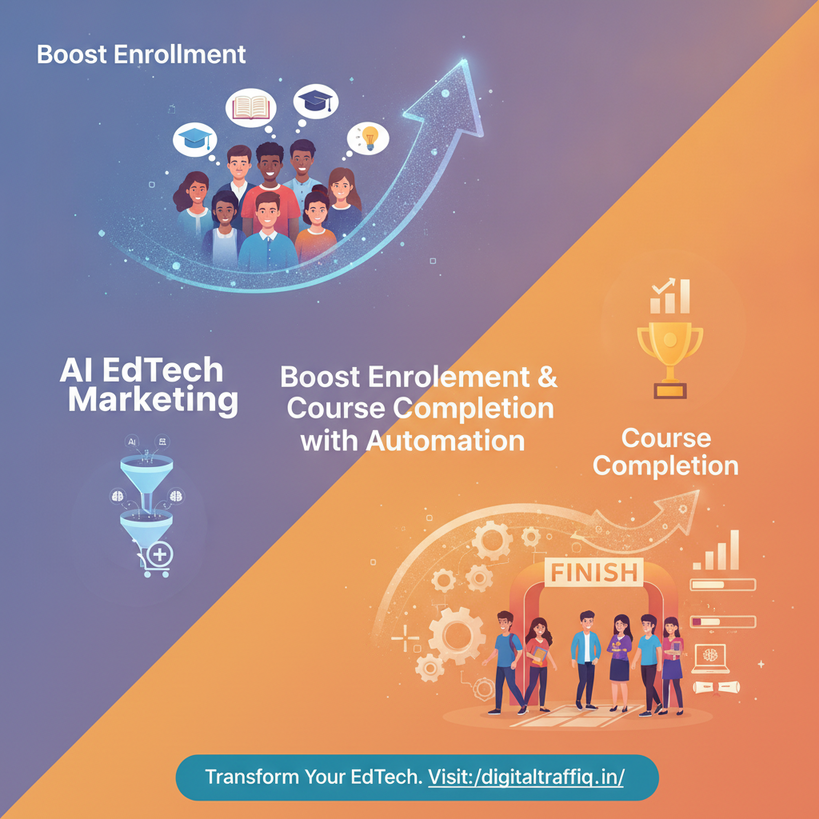
AI-Powered Marketing Automation in EdTech: Boosting Enrollment and Course Completion
Estimated reading time: 6 minutes
Key Takeaways
- AI-driven personalization transforms student acquisition by analyzing behavioral data to deliver timely, relevant outreach.
- E-learning enrollment automation can boost conversion rates by 30% or more through intelligent lead scoring and nurturing sequences.
- Student retention AI proactively intervenes to reduce dropout rates, with platforms reporting 15–25% increases in completion rates.
- Predictive analytics enable course completion optimization by identifying at-risk students before they disengage.
- Unified marketing automation across the student lifecycle creates a closed-loop system for continuous improvement and scalable growth.
Table of Contents
In the rapidly evolving landscape of online education, EdTech platforms face a dual challenge: attracting new learners and keeping them engaged through to course completion. With competition intensifying, traditional marketing approaches often fall short. Enter AI-powered marketing automation—a game-changer for e-learning providers. This technology not only streamlines student acquisition but also personalizes the learning journey, directly boosting enrollment numbers and course completion rates. For platforms leveraging AI-driven student engagement, the results are transformative.
The New Frontier of AI EdTech Marketing
AI EdTech marketing represents a paradigm shift from broad, one-size-fits-all campaigns to hyper-personalized, data-driven strategies. By harnessing machine learning algorithms, educational institutions can analyze vast amounts of behavioral data—from website visits to course previews—to predict what prospective students need and when they need it. This level of insight enables automated, timely outreach that resonates with individual motivations.
For example, an AI system can identify a user who repeatedly visits a coding bootcamp page but hasn’t enrolled. Instead of sending a generic reminder, the system can trigger a personalized email highlighting success stories of similar learners, along with a limited-time discount. This is the essence of educational lead generation AI: converting passive interest into active enrollment.
E-Learning Enrollment Automation in Action
One of the most powerful applications of AI in this space is e-learning enrollment automation. Traditional enrollment funnels rely on manual segmentation and batch emails, which often result in low conversion rates. AI automates this process by scoring leads based on engagement patterns—such as time spent on specific course pages, quiz completions, or webinar attendance.
High-scoring leads can be automatically enrolled in nurturing sequences that deliver tailored content, including course previews, instructor introductions, or alumni testimonials. This ensures that no potential student slips through the cracks. For platforms using AI-powered EdTech campaigns, this automation alone can increase enrollment rates by 30% or more, according to industry benchmarks.
Furthermore, AI can optimize ad spend by identifying the channels and messages that generate the highest-quality leads. By continuously learning from conversion data, the system refines targeting in real time, ensuring that every marketing dollar is spent on reaching the most likely enrollees.
Student Retention AI: Keeping Learners on Track
Acquiring students is only half the battle. The real metric of success for any EdTech platform is student retention AI capabilities that reduce dropout rates. Online learners frequently struggle with motivation, time management, or a lack of immediate support. AI addresses these pain points by creating proactive intervention systems.
For instance, if a student has not logged in for a week or has stopped completing assignments, an AI-driven system can automatically send a personalized check-in message, offer additional resources, or even recommend a study schedule. This is student journey personalization AI at its finest—adapting the learning experience to the individual’s pace and preferences.
Moreover, AI can analyze course interaction data to identify which modules are causing confusion. If a significant number of students fail a quiz on a particular topic, the platform can automatically surface supplementary content or schedule a live Q&A session. This not only improves course completion optimization but also enhances overall satisfaction and word-of-mouth referrals.
Course Completion Optimization Through Predictive Analytics
Course completion optimization is the holy grail of EdTech success. High completion rates validate the platform’s value and drive organic growth through positive reviews and referrals. AI excels here by using predictive analytics to flag at-risk students before they disengage.
Machine learning models can incorporate dozens of variables—such as login frequency, assignment submission timeliness, forum participation, and even sentiment from discussion posts—to calculate a “completion probability” score. When a student’s score drops below a threshold, automated workflows deploy: a scheduled coaching session, a motivational video, or a gentle nudge from a peer mentor.
This kind of AI-driven student engagement builds a supportive ecosystem that mimics the best aspects of in-person learning. The result? Platforms like Coursera and Udacity have reported completion rate increases of 15–25% after implementing such systems.
Online Education Marketing Automation: A Unified Strategy
For EdTech leaders, the ultimate goal is to integrate online education marketing automation across the entire student lifecycle—from first touch to graduation. AI bridges the gap between marketing and learning management systems, creating a seamless data flow.
A unified strategy might look like this:
- Awareness phase: AI analyzes social media and search behavior to target ads at users likely to be interested in specific courses.
- Consideration phase: Automated email sequences deliver personalized course comparisons and demo access.
- Enrollment phase: E-learning enrollment automation triggers tailored offers and reminders.
- Retention phase: Student retention AI monitors engagement and intervenes as needed.
- Advocacy phase: Satisfied completers are automatically prompted to leave reviews or refer friends.
This closed-loop system ensures that marketing efforts are constantly informed by student performance data, creating a cycle of continuous improvement.
The Digital Traffiq Advantage
At Digital Traffiq, we specialize in building and executing these sophisticated AI-powered marketing ecosystems for EdTech companies. Our platform integrates seamlessly with your existing LMS and CRM, enabling you to deploy student journey personalization AI without extensive custom development. We help you move beyond generic campaigns to deliver experiences that truly resonate.
By partnering with Digital Traffiq, EdTech platforms can expect:
- Higher enrollment conversions through intelligent lead scoring and automation.
- Improved retention rates with proactive, AI-driven student support.
- Optimized marketing spend via real-time campaign adjustments.
- Scalable growth as your systems learn and improve over time.
Conclusion
The future of EdTech marketing is intelligent, automated, and deeply personal. AI-powered marketing automation is no longer a nice-to-have—it is a competitive necessity. From boosting enrollment to ensuring students cross the finish line, the technology empowers platforms to deliver better outcomes while reducing operational overhead.
As the e-learning market continues to expand, those who embrace AI EdTech marketing will lead the pack. Whether you are looking to optimize course completion or supercharge lead generation, the tools and strategies exist today. The question is: are you ready to implement them? Contact Digital Traffiq to start transforming your student acquisition and retention strategy with the power of AI.