
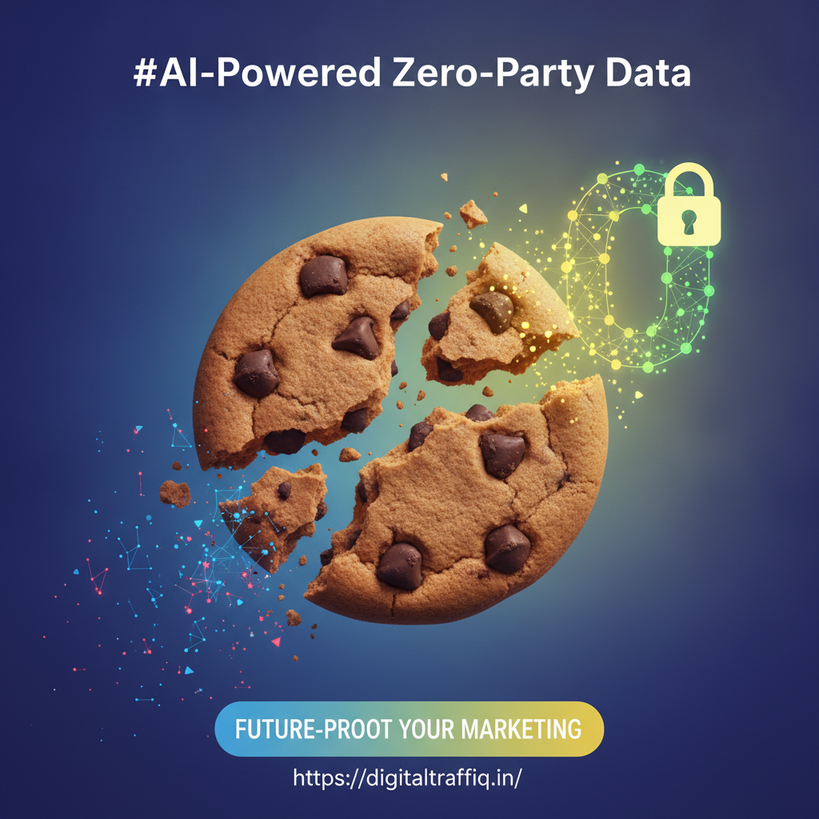
AI-Powered Zero-Party Data: The Future-Proof Cookieless Marketing Strategy for First-Party Trust
Estimated Reading Time: 9 minutes
Key Takeaways
- Zero-party data is information customers intentionally share—and it’s the most durable asset in a cookieless world.
- AI transforms zero-party data from static survey responses into living, breathing customer intelligence.
- The Trust Flywheel—Ask, Reward, Learn, Refine, Repeat—is the engine of consent-based marketing.
- Post-cookie personalization AI delivers tailored experiences without surveillance, using declared data instead of tracking.
- A future-proof digital marketing strategy is platform-agnostic, regulation-proof, and compounds in value over time.
Table of Contents
- The Cookie Crumbles: Why Marketing Needs a New Data Foundation
- What Is Zero-Party Data—and Why Does AI Make It Powerful?
- Why Cookieless Marketing Demands a First-Party Trust Model
- The Trust Flywheel
- How AI Supercharges Zero-Party Data Collection
- Building Post-Cookie Personalization With AI
- Privacy-First Marketing Automation: The Operational Backbone
- The Future-Proof Digital Marketing Strategy: AI + Zero-Party Data
- Common Pitfalls—and How to Avoid Them
- Getting Started: A Practical Roadmap
- Final Thoughts: Trust Is the New Targeting
The Cookie Crumbles: Why Marketing Needs a New Data Foundation
For decades, third-party cookies were the invisible engine powering digital advertising. Marketers could track users across the web, build behavioral profiles, and serve eerily accurate ads. That era is over. With Google Chrome phasing out third-party cookies, Apple’s App Tracking Transparency reshaping mobile, and global privacy regulations tightening, the data landscape has fundamentally shifted.
For businesses relying on third-party data, this is a crisis. For forward-thinking brands, it’s the greatest opportunity in a generation. The winners in this new era will be those who master AI zero-party data marketing—a strategy that combines the intelligence of artificial intelligence with the transparency of data customers willingly share.
At Digital Traffiq, we’ve spent years helping brands navigate this transition. This article breaks down how AI-powered zero-party data strategies build first-party trust and future-proof your marketing in a cookieless world.
What Is Zero-Party Data—and Why Does AI Make It Powerful?
Zero-party data is information a customer intentionally and proactively shares with a brand. Think preference centers, interactive quizzes, surveys, product recommendation tools, and loyalty program sign-ups. Unlike third-party data, which is inferred or purchased, zero-party data is explicitly given.
But collecting zero-party data is only half the battle. The real challenge is activating it intelligently at scale. That’s where AI becomes transformative.
AI-driven customer data strategy allows brands to:
- Segment instantly based on declared preferences rather than guessed behaviors
- Predict intent by analyzing patterns across zero-party data points
- Personalize at scale without relying on invasive tracking
- Continuously enrich profiles as customers share more over time
In short, AI turns zero-party data from a static survey response into a living, breathing customer intelligence asset.
Why Cookieless Marketing Demands a First-Party Trust Model
When third-party cookies disappear, brands lose the ability to follow users across the web. What remains is the direct relationship between brand and customer—and that relationship is built on trust.
Consumers today are more privacy-conscious than ever. They’re wary of brands that track them without consent, and they reward those that respect their boundaries. A cookieless marketing strategy built on zero-party data flips the traditional model: instead of extracting data covertly, brands ask for it openly and offer clear value in return.
This is consent-based marketing AI in action. When a customer tells you their preferences, you’re no longer guessing. You’re acting on information they chose to share—and that permission creates a deeper, more durable connection.
The Trust Flywheel
Here’s how the cycle works:
- Ask – Use interactive tools to invite customers to share preferences
- Reward – Deliver immediate value (personalized recommendations, exclusive content, better experiences)
- Learn – Use AI to enrich and segment data continuously
- Refine – Improve personalization, which builds more trust
- Repeat – Trusted customers share more data, fueling the flywheel
Brands that master this flywheel don’t just survive the cookieless transition—they thrive in it.
How AI Supercharges Zero-Party Data Collection
Traditional zero-party data collection relies on static forms and one-time interactions. AI changes the game entirely. Here’s how zero-party data collection AI works in practice:
1. Dynamic Preference Centers
Instead of a generic sign-up form, AI-powered preference centers adapt in real time. A user who selects “outdoor gear” might see follow-up questions about hiking vs. camping. Each answer enriches the profile and improves future recommendations.
2. Conversational Data Capture
AI chatbots and virtual assistants can engage users in natural conversation, gathering preferences without feeling like an interrogation. These tools feel helpful, not invasive—and they collect rich, structured data in the process.
3. Predictive Enrichment
AI data enrichment marketing goes beyond what customers explicitly share. By combining zero-party data with first-party behavioral signals (site visits, purchase history), AI can infer additional preferences—always within consent boundaries—to create a fuller picture.
4. Real-Time Activation
The moment a customer shares data, AI can trigger personalized experiences: a tailored email, a dynamic homepage, a product recommendation. This immediacy reinforces the value exchange and encourages further sharing.
Building Post-Cookie Personalization With AI
The holy grail of cookieless marketing is personalization without surveillance. Post-cookie personalization AI makes this possible by relying on declared data rather than inferred tracking.
Imagine a customer tells you they prefer eco-friendly products and shop primarily on mobile. With AI, you can:
- Serve mobile-optimized landing pages featuring sustainable products
- Send email campaigns highlighting your greenest offerings
- Adjust ad creative on walled gardens (where you can still target based on first-party data)
- Prioritize customer service scripts around sustainability questions
This level of personalization feels magical to the customer—but it’s built entirely on data they chose to share. No cookies required.
Privacy-First Marketing Automation: The Operational Backbone
Collecting zero-party data is step one. Activating it across channels requires privacy-first marketing automation—systems designed to respect consent while delivering personalized experiences at scale.
Key components include:
- Consent management platforms that track what each customer agreed to share
- Customer data platforms (CDPs) that unify zero-party and first-party data
- AI orchestration engines that trigger the right message at the right time
- Compliance safeguards that ensure every action respects regional privacy laws
At Digital Traffiq, we help brands architect these systems so that personalization and privacy aren’t opposing forces—they’re partners.
The Future-Proof Digital Marketing Strategy: AI + Zero-Party Data
A future-proof digital marketing strategy isn’t about chasing the latest platform update. It’s about building a foundation that adapts to whatever comes next. AI-powered zero-party data provides that foundation.
Here’s why it’s resilient:
It’s Platform-Agnostic
Zero-party data lives in your systems, not on someone else’s platform. Whether Google, Meta, or TikTok changes their rules, your customer relationships remain intact.
It’s Regulation-Proof
Because zero-party data is shared with explicit consent, it aligns with GDPR, CCPA, and emerging privacy laws. No fines, no scandals, no lost trust.
It Compounds Over Time
Every interaction enriches your data. The longer a customer relationship lasts, the more valuable it becomes—unlike third-party data, which is rented, not owned.
It Powers Every Channel
From email to SMS to onsite personalization to paid media, zero-party data fuels consistent, coordinated experiences across the entire customer journey.
Common Pitfalls—and How to Avoid Them
Even with the right tools, brands often stumble. Watch out for these mistakes:
- Asking for too much, too soon. Build trust gradually. Start with one or two preference questions, then expand.
- Failing to deliver value. If customers share data and get nothing in return, they won’t share again.
- Siloing data. Zero-party data must flow into your CDP and activation platforms to be useful.
- Ignoring AI’s potential. Manual segmentation can’t keep pace. Let AI do the heavy lifting.
Getting Started: A Practical Roadmap
Ready to build your AI-powered zero-party data strategy? Here’s a simple roadmap:
- Audit your current data sources. What first-party data do you already have?
- Identify high-value touchpoints. Where can you invite customers to share preferences?
- Deploy AI-powered collection tools. Start with a preference center or interactive quiz.
- Integrate with your CDP and automation stack. Make sure data flows seamlessly.
- Activate and measure. Personalize experiences, track engagement, and refine.
Final Thoughts: Trust Is the New Targeting
In a cookieless world, the brands that win will be the ones trusted enough to earn customer data—and smart enough to use it well.
AI-powered zero-party data strategies offer a clear path forward: build trust, collect consent-based insights, and activate them with intelligence.
At Digital Traffiq, we specialize in helping brands make this transition. From AI-driven data collection to privacy-first automation, we build marketing systems that are ready for whatever the future holds. The cookie era is ending. The trust era is just beginning. Let’s build it together.